
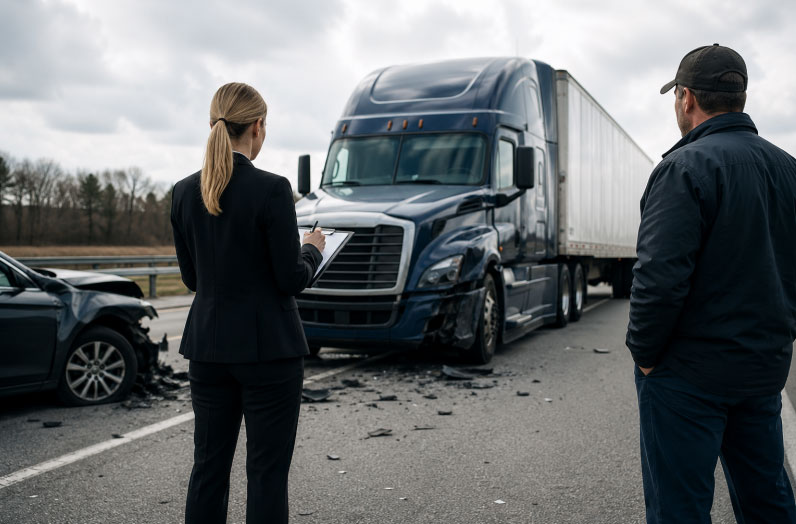
After a serious truck wreck, it’s normal to assume the truck driver is the only one at fault. Sometimes that’s true.
But in many commercial truck accident cases, the bigger picture matters: the driver may be one link in a chain of decisions made by a trucking company, a maintenance vendor, a shipper, or even a manufacturer.
Why Liability is Different in Truck Crashes
Big rigs are often owned by one company, operated by another, loaded by a third, and insured through layered policies. That means the “who pays” question can turn into “who had a duty, who broke it, and how did that cause the crash?”
South Carolina also uses a fault-based system where responsibility can be divided among multiple parties, and a person’s recovery can be affected by their share of fault.
The Most Common Liable Parties in a South Carolina Truck Accident
1) The Truck Driver
A driver may be responsible when a wreck involves:
- speeding, following too closely, or unsafe lane changes
- distracted or impaired driving
- fatigue or falling asleep
- failure to adjust to rain, fog, or traffic backups
In plain terms, if the driver didn’t operate the rig safely, they can be the first (but not always the only) liable party.
2) The Trucking Company
Trucking companies can be responsible in two big ways:
-
Vicarious liability (responsible for an employee’s actions)
If the driver was working and within the scope of the job, an employer can be held accountable under the doctrine of respondeat superior.
-
Direct negligence (the company’s own wrongdoing)
Even when the driver is clearly at fault, a company may share blame for things like:
- negligent hiring (bringing on unsafe drivers)
- poor training or supervision
- pushing unrealistic schedules
- failing to enforce safety rules
- ignoring prior safety violations
- failing to properly maintain their vehicles
This “company negligence” angle is one reason people search for a South Carolina truck accident lawyer after a major crash. It’s not just about the last mistake right before impact, but the policies that made the crash more likely.
3) A Separate Employer (Staffing or Contractor Relationships)
Some drivers are hired through staffing companies or operate under contract arrangements. Liability can depend on who controlled the work and the driving at the time. Questions about “scope of employment” and agency can become central in these cases.
4) The Truck Owner or Trailer Owner
Sometimes the tractor and trailer have different owners. If the owner knowingly allowed an unsafe vehicle on the road or handed the keys to an unfit driver, they may also be a defendant.
South Carolina recognizes negligent entrustment claims in appropriate situations, which generally focus on whether someone knowingly entrusted a vehicle to an unsafe driver.
5) Maintenance and Repair Companies
Commercial trucks rack up miles fast. When maintenance is sloppy, skipped, or performed incorrectly, mechanical failures can lead to catastrophic crashes. Examples include:
- brake failures
- tire blowouts
- steering issues
- lighting problems that make the truck hard to see
A maintenance vendor can be liable if poor work or failure to identify hazards contributed to the wreck.
6) The Shipper, Loader, or Cargo Company
Cargo issues are a frequent hidden cause of truck crashes. A shipper or loading company may share responsibility when:
- The load is unbalanced (causing rollovers)
- Cargo isn’t secured (leading to spills or shifting)
- Weight limits are ignored
- A trailer is improperly sealed or documented
Cargo evidence can disappear quickly, so early investigation matters in these cases.
7) Freight Brokers and Logistics Companies
Brokers don’t usually drive the truck, but they can influence safety by selecting carriers. Depending on the facts, a broker may be accused of negligent selection or other wrongful conduct. These cases are very fact-specific, but they’re part of the “bigger net” analysis in determining who is liable in a truck accident.
8) Truck or Parts Manufacturers
If a defective product contributed to the crash or made injuries worse, the manufacturer (or parts supplier) may be liable. Common examples:
- defective brakes or steering components
- tire defects
- underride guard issues
- trailer coupling failures
Product cases often require preserving the vehicle and its components so they can be properly inspected.
9) Government Entities (Road Design or Maintenance Issues)
Some crashes involve missing signage, poor road maintenance, malfunctioning signals, or dangerous design. Claims involving government entities can have unique rules and shorter deadlines than typical personal injury claims, so it’s important to get guidance quickly if a roadway issue may be involved.
How South Carolina Fault Rules Affect Truck Accident Liability
In South Carolina, juries can assign fault percentages among multiple defendants, and a person’s compensation can be reduced by their share of fault. In many situations, a person cannot recover if their fault exceeds 50%.
That’s one reason truck cases are so evidence-driven. The side that can clearly explain “who did what” and tie it to documents, data, and testimony is in a stronger position.
Timing Matters: Don’t Sleep on Deadlines
Most injury cases in South Carolina are subject to a three-year statute of limitations, and the clock can start running when someone knew, or reasonably should have known, they had a claim.
Even when three years sounds like plenty of time, truck evidence often doesn’t last that long in the real world. Driver logs, dispatch records, onboard data, and maintenance documentation can be overwritten or become harder to obtain over time.
SC Truck Accidents FAQ
Who can be sued after a South Carolina truck accident?
Potential defendants may include the truck driver, the trucking company, an employer, the vehicle owner, maintenance providers, cargo loaders, brokers, manufacturers, and, depending on the facts, sometimes government entities.
Is the trucking company always responsible for the driver?
Not always, but employers are often held responsible for employees’ actions within the scope of their employment under the doctrine of respondeat superior.
What if more than one party caused the crash?
South Carolina allows fault to be divided among multiple parties, and compensation can be reduced based on assigned fault.
How long do I have to file a truck accident lawsuit in South Carolina?
Many injury claims must be filed within three years, but the exact deadline can depend on the claim type and circumstances. This is just one of the many concerns after a car accident.
What Seaton, Duncan, & Holmes Law Looks for in a Truck Case
When Seaton, Duncan, & Holmes Law evaluates trucking company negligence and other liability angles, the goal is usually to map out:
- Every party involved in operating, owning, loading, dispatching, and maintaining the truck
- What each party was supposed to do
- How the breakdown happened
- What evidence supports it
This isn’t about blaming everyone. It’s about identifying the right defendants and insurance coverage so an injured person isn’t stuck with only a small piece of the full picture.
Need help with your truck accident case?
If you’re dealing with medical bills, missed work, or a totaled vehicle after a crash with a commercial truck, it’s worth getting a clear answer on who is liable in a truck accident and what evidence should be preserved.
Use this contact form to request a consultation with Seaton, Duncan, & Holmes Law about your South Carolina truck accident case and learn what your next steps could look like.
Ready To Speak With An Attorney?
Let’s discuss the details of your case and see if we can help.